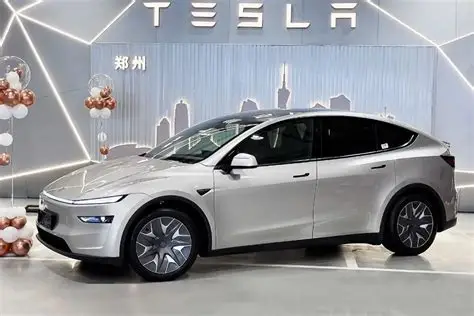
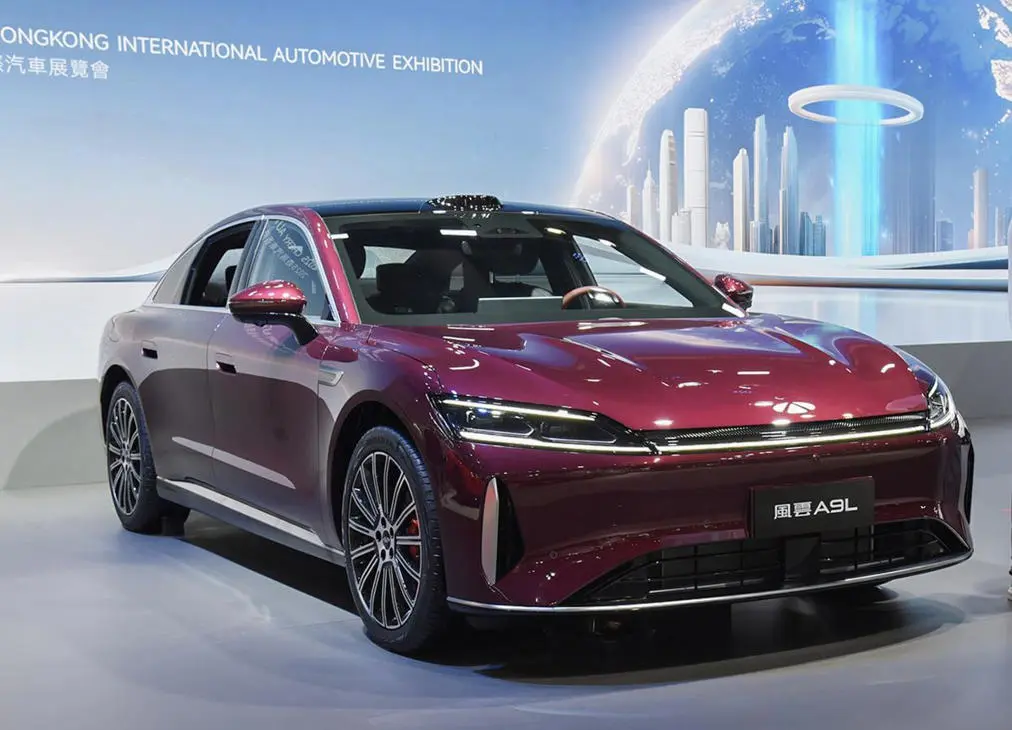
Germany, historically revered as the “forefather” of the automobile industry, is struggling amid the rise of electric vehicles (EVs). In 2024, its pure EV sales plummeted by 27% year-on-year, as delays in technological transformation and cost pressures squeeze the German auto sector. Anxious German engineers have resorted to reverse-engineering the “heart” of EVs—power batteries—from two leading automotive giants, Tesla (U.S.) and BYD (China), in an attempt to learn from their advanced technologies.
On March 7, Cell Reports Physical Science published a paper by a research team from RWTH Aachen University in Germany, detailing a systematic teardown of Tesla’s “4680 battery” and BYD’s “Blade Battery.” The study focused on the specific design and performance characteristics of each battery, evaluating mechanical design and dimensions, electrode material composition, electrical and thermal performance, as well as battery assembly processes and material costs.
Overall, BYD’s battery proved to be more efficient due to its superior thermal management.

Mechanical Design: Adhesive Innovation vs. Structural Revolution
Upon disassembling the batteries, German researchers found that:
- Tesla’s 4680 battery utilizes a new type of adhesive to secure electrode active materials, showcasing a significant innovation compared to industry standards. This adhesive maintains electrode structural integrity while enabling higher energy density.
- BYD’s Blade Battery, in contrast, employs a structural innovation, using a special laminated process at the separator edges to bind 96 electrode layers into a 14mm-thick unified blade-like structure. This design improves battery pack space utilization to over 60% while simplifying the thermal management system.
Mechanical Structure Schematics

- (A) BYD Blade Battery: Z-shaped folded stacking structure; double-sided insulated aluminum casing; side-mounted removable terminals.
- (B) Tesla 4680 Battery: Jelly-roll electrode winding; steel casing with nickel coating; bottom vent valve design.
Electrode Stacking Structure

- (A) BYD Blade Battery: Single-stack Z-fold (38 positive/39 negative electrodes); laminated sealed separator edges; plastic rail-fixed structure.
- (B) Tesla 4680 Battery: Central hollow cavity winding design; top/bottom adhesive tape fixation; tabless design for current collection.
Material Composition: The Cost Battle Between NMC and LFP
Spectroscopic analysis revealed:
- Tesla uses high-nickel NMC (nickel-manganese-cobalt) cathodes with an energy density of 643Wh/L but at a material cost €10/kWh higher than LFP (lithium iron phosphate) batteries.
- BYD adopts an LFP cathode, which, despite a lower energy density of 355Wh/L, achieves a significant cost advantage per kWh through a cobalt-free formulation and structural innovation.
Surprisingly, neither company incorporated silicon-based materials in their graphite anodes.
“This is particularly noteworthy in Tesla’s case, as silicon anodes are seen as a key pathway to higher energy density,” said study lead Jonas Gorsch.
Material Composition and Costs

- (A) Weight Distribution:
- BYD Blade Battery: Active materials 2%
- Tesla 4680 Battery: Active materials 7%
- (B) Material Cost:
- BYD Blade Battery: €73.2/kWh
- Tesla 4680 Battery: €83.5/kWh
- (LFP cathode material costs are 34% lower)
Manufacturing Process: Different Designs, Same Laser Welding Approach
Despite differing design philosophies, both Tesla and BYD use laser welding instead of the industry-standard ultrasonic welding to connect electrode foils.
Key findings:
- BYD’s laser welding density is 37% lower than Tesla’s but compensates for conductivity efficiency with its Z-fold stacking process.
- Tesla’s 4680 battery casing and current collectors account for 40% of total volume, similar to BYD’s 42% non-active material share—highlighting a common challenge in modern battery design.
Electrical Connection Technology

- (A) BYD Blade Battery: Pre-welded tabs with ultrasonic + laser busbar welding; composite insulation sealing structure.
- (B) Tesla 4680 Battery: Slanted cut current collection structure; six-point laser welding; central cavity electrode pole welding.
Thermal Performance: Cylindrical vs. Blade – A Structural Dilemma
Charging and discharging tests revealed:
- Tesla’s battery generates 1.8 times more heat per unit volume than BYD’s due to its cylindrical shape limiting surface area.
- BYD’s Blade Battery increases heat dissipation contact area by 70%, enabling a simpler liquid-cooling system layout.
“At -10°C, Tesla’s battery internal resistance increases by 58%, whereas BYD’s only rises by 22%,” Gorsch noted. “This explains why BYD dares to adopt a cell-to-body (CTB) module-free design.”
Electrical Performance Comparison

- (A) DC Internal Resistance (20°C, 1C rate):
- BYD Blade Battery: 35mΩ
- Tesla 4680 Battery: 68mΩ
- (B) Volume Heat Generation (1C Discharge):
- Tesla 4680 Battery generates 1.8× the heat of BYD’s Blade Battery.
This study establishes the first comprehensive analytical framework for large-format power batteries, covering 23 key parameters across mechanical design, materials, and manufacturing processes.
As Gorsch emphasized in the paper’s conclusion:
“These findings provide empirical benchmarks for next-generation battery development. Future advancements—especially in silicon anode applications and solid-state electrolyte integration—must balance mechanical design with electrochemical performance.”
This reverse-engineering study from a traditional automotive powerhouse may serve as a critical reference for global EV battery technology evolution.