The World Enters a New Era of Metal Geopolitics
- General

By
Updated December 6, 2025
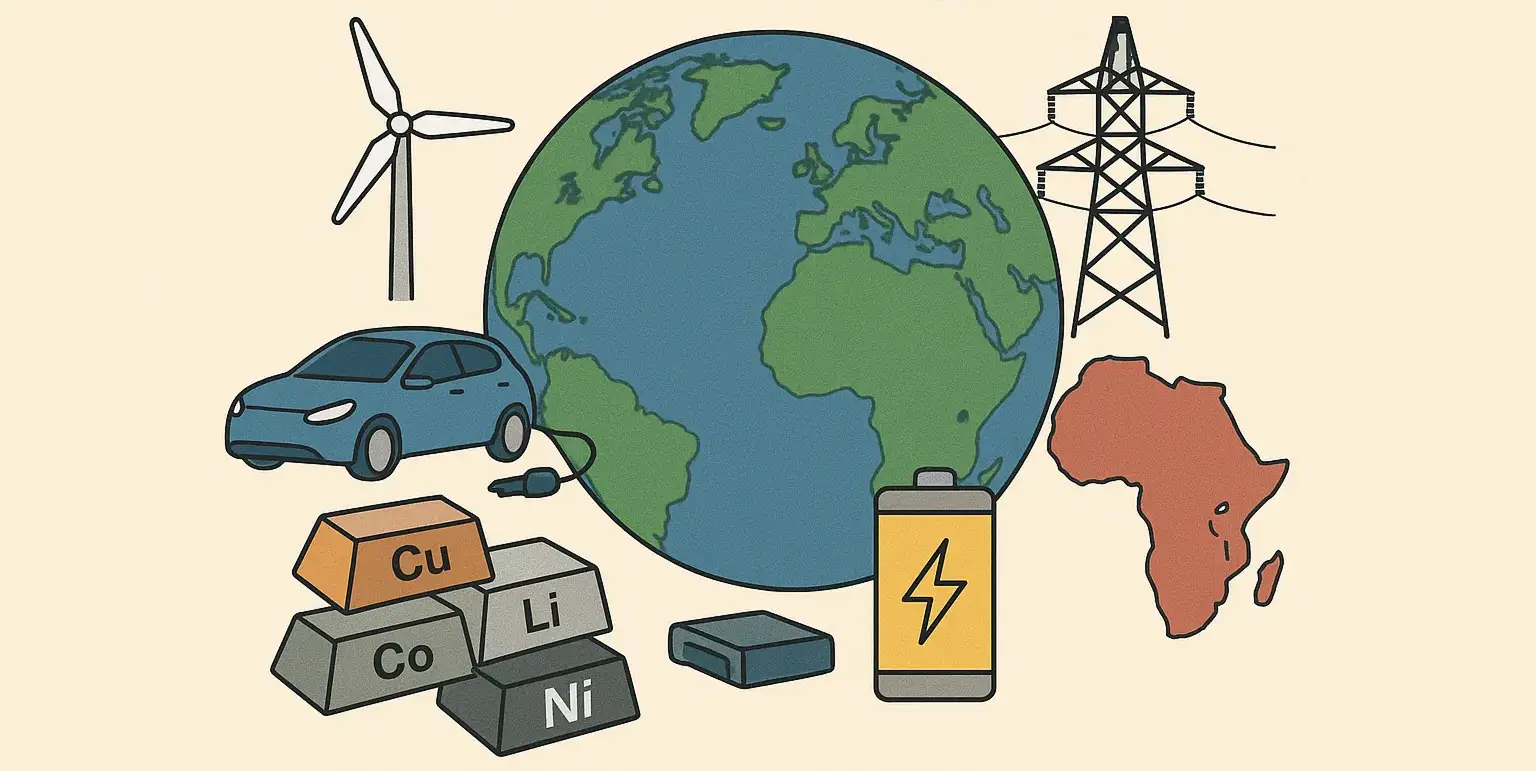
From lithium batteries to wind turbines and from transmission lines to energy storage systems, every link in the global energy transition relies on critical metals including copper, lithium, cobalt and nickel. These materials serve as both industrial foundations and strategic commodities whose price fluctuations and supply dynamics shape the success of the energy transition. As the world moves beyond the age of big oil, it is entering what some analysts call the age of the big shovel. Critical metals have become a new arena of global competition.
BloombergNEF estimates that under an economic transition scenario, the energy sector will require 2.6 billion tons of additional metals by 2050. Achieving net zero emissions would push this figure to 4.8 billion tons, almost double the demand in the economic transition case. Traditional industrial metals such as steel, copper and aluminum will remain widely used across energy related industries, while battery related sectors including electric vehicles and storage require a broader and faster growing range of metals. Ten years from now demand for metals in wind and solar may decline, but demand for battery metals will continue rising.
Divergent Demand and Opportunities for China
Traditional metals like steel and aluminum still provide the foundation of the transition, yet their total demand grows slowly. In contrast, lithium, cobalt, nickel, graphite and rare earths experience rapid growth because the energy transition is the core driver of their demand. According to the International Energy Agency, global demand for critical minerals continued strong growth in 2024, with lithium demand rising nearly 30 percent, far above the 10 percent annual growth rate of the 2010s. If countries deliver on existing energy and climate pledges, demand for critical minerals in 2030 will double from 2022 levels and could quadruple by 2050.
Demand distribution is uneven across geography and time. China will remain the dominant market for lithium over the next decade because it is the world’s largest market for electric vehicles and storage. In the longer term, Southeast Asia and other emerging markets will rise, forming a three pillar landscape with China, Europe and the United States.
This mismatch creates significant opportunities for Chinese metal producers. China is well positioned to supply global demand because critical metal demand is rising rapidly while new mine development typically requires five to ten years or longer. Chinese companies, benefitting from early market growth and fast capacity construction, can better match global demand expansion.
For battery metals, resources are concentrated in Australia, Southeast Asia, Africa and South America, while major consumers such as China, Europe and the United States lack domestic supply. Chinese firms have built a dual advantage. They made early overseas investments and greatly expanded supply from Africa, where lithium shipments in 2024 nearly matched those of Australia. China also has domestic resources in Qinghai, Sichuan and Jiangxi. With these developments, China may overtake Australia around 2029 to become the world’s largest supplier of lithium resources. China already holds a decisive lead in processing and refining.
Risks: Price Volatility and Technology Shifts
The industry faces two major shocks. First, sharp price volatility increases operational risk. Low prices in the past two years prompted resource governments to intervene. The Democratic Republic of Congo has restricted cobalt exports and imposed export quotas, while Indonesia stopped approving new nickel intermediate projects. These interventions may affect future supply.
Second, rapid technological shifts reshape metal demand. The surge of lithium iron phosphate batteries increased demand for lithium carbonate while reducing demand for nickel, cobalt and lithium hydroxide. Future technologies such as solid state and sodium ion batteries may further alter metal demand structures. Strengthening vertical integration, following the example of battery makers expanding downstream, may help Chinese metal firms mitigate risks.
Global Competition and the Rise of Metal Politics
Critical minerals have rapidly moved to the forefront of global supply chain and geopolitical debates. After a century of oil politics, the world is entering a new era of metal politics. The United States issued Executive Order 13817 to strengthen critical mineral supply chains and launched the Mineral Security Partnership with Canada, Australia and others to reduce reliance on China. The European Union introduced the Critical Raw Materials Act regulating 34 critical raw materials and limiting dependence on any single third country.
Analysts note that the United States is assembling alliances of like minded countries to rebuild supply chains that exclude China. However, the long term prospects of these alliances remain uncertain, and many observers question their feasibility.
The World Economic Forum reports that hundreds of national policies related to critical mineral resilience have emerged recently, yet many are unilateral and may worsen geopolitical fragmentation. Any effective strategy must place the interests of the global south at its core because many critical mineral reserves are located there.
Africa’s Strategic Role and China’s Deepening Ties
Africa holds some of the world’s richest transition mineral deposits, with global reserve shares ranging from 4.45 percent to 79.26 percent across copper, iron, aluminum, lithium, cobalt, nickel, rare earths and platinum group metals. The Democratic Republic of Congo possesses more than 54.55 percent of global cobalt reserves and supplies over 75.86 percent of cobalt output in 2024. South Africa and Zimbabwe hold 79.26 percent of global platinum group metal reserves, while Guinea controls 25.52 percent of global bauxite, a major source for China’s aluminum industry.
Despite strong resource endowments, Africa struggles with infrastructure gaps, limited processing capacity and policy uncertainty. China depends heavily on these resources, with external dependence reaching 92.27 percent for cobalt, 98 percent for platinum group metals and 67.32 percent for lithium. This creates natural complementarities between China’s market and Africa’s resources.
However, resource nationalism and shifting mining laws pose policy continuity risks. Complex geopolitical dynamics involving the United States and the European Union add further challenges. Experts suggest establishing long term mechanisms based on shared risk, shared investment and shared benefits to balance resource sovereignty, investment security and technological progress.
Walmart, the U.S. retail giant, has officially divested its entire stake in JD.com, marking the end of one of the most significant foreign investments in China’s burgeoning e-commerce sector. The move comes as JD.c...
- 07/10/2024 in General
Attending Canton Fair can be considered a valuable investment for businesses looking to enhance their product sourcing and build meaningful relationships with suppliers. The fair offers unique advantages that set it apar...
- 18/09/2024 in General
An expo, short for exposition, is a large-scale event where businesses, professionals, and even the public come together to showcase new products, innovations, and ideas. These events are fantastic opportunities for netw...
- 18/09/2024 in General
Attending the Canton Fair offers exceptional opportunities for businesses seeking to expand their sourcing capabilities globally. As the leading trade exhibition, it provides access to a wide array of products and poten...
- 16/09/2024 in General
Here are the steps to attend the Canton Fair as a new buyer or a seasoned buyer: First: Registration on the Canton Fair Website To attend the Canton Fair 2026, your first step is to register an account on the offic...
- 15/09/2024 in General