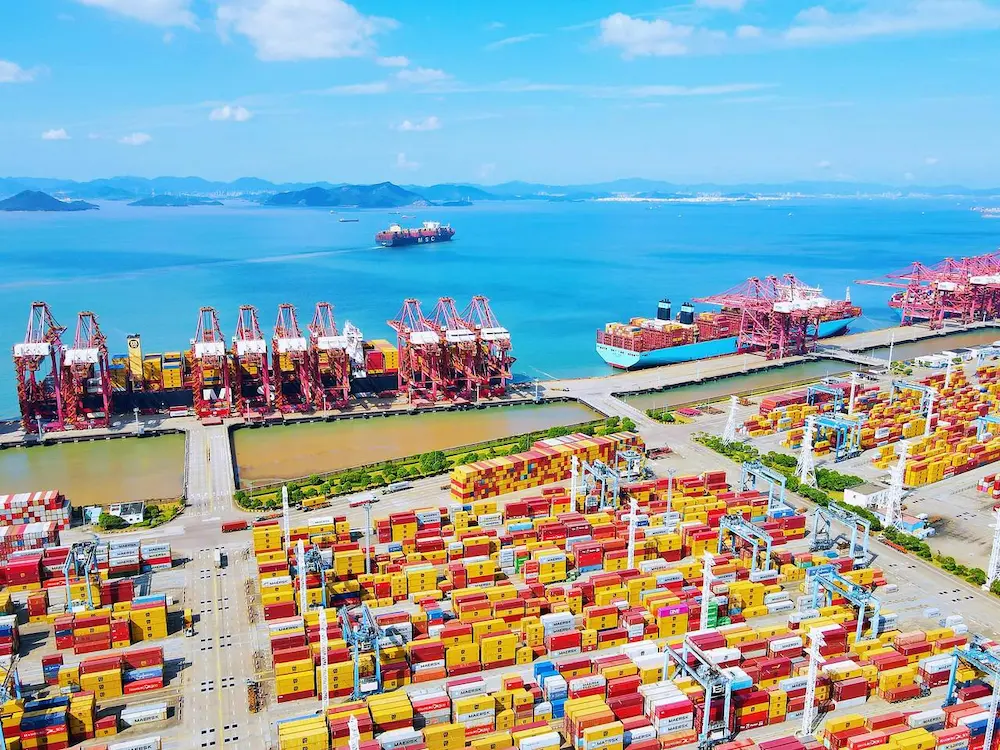

“After resting well in Ningbo this time, I look forward to docking here again.” On December 10, Korean captain Kim Yoon-kyung watched the coastline fade from the bridge of his cargo ship, Freesia, as it departed Ningbo-Zhoushan Port’s Daxie Terminal. This Chinese coastal city was no longer a stranger to him.
For Captain Kim, docking for cargo loading—a process lasting about a day—offered a rare opportunity for a brief onshore escape. After five months at sea, he entrusted a local shipping agent to guide him on an impromptu “China Travel,” exploring the streets of Ningbo.

Reopening China: An Opportunity for Tourism and Connection
China’s reopening policies—ranging from expanding visa-free entry to rolling out the 144-hour transit visa exemption—have reignited global tourism and international exchanges. Buzzwords like “City Uncity” and “China Travel” have captured the attention of social media, turning Chinese port cities into trending topics for global voyagers.
Among these visitors are international seafarers, a unique and often overlooked group of “ocean travelers” arriving via ports in Shanghai, Shenzhen, Ningbo, Zhoushan, and beyond. According to port authorities, approximately 270,000 international seafarers enter and exit Ningbo-Zhoushan annually, making it one of the busiest hubs for maritime activity.

With these soaring figures, new questions arise: Can international seafarers become a promising niche in China’s inbound tourism market? What are their specific needs when coming ashore? And how can policies and services better cater to these transient but eager visitors?

The Barriers to Shore Leave
Shipping is the backbone of global trade, responsible for over 80% of worldwide commerce. For China, the so-called “factory of the world,” a staggering 90% of international trade is conducted via sea routes. The high volume of maritime activity means China is one of the top destinations for ships, and by extension, for seafarers.
Despite this, many seafarers seldom disembark during their visits to Chinese ports. Statistics from the Ningbo-Zhoushan Port reflect the disparity: while over 270,000 seafarers enter its ports annually, fewer than 3,000 have applied for temporary entry permits from January to September of this year.
Several challenges prevent more seafarers from exploring shore leave.
“Transportation is a significant hurdle,” says Ding Tianming, a maritime professor at Zhejiang Ocean University. Ningbo-Zhoushan’s sprawling geography, with core terminals spread across various islands like Liuheng, Jintang, and Daishan, adds logistical barriers for seafarers seeking a convenient onshore visit.
Other experts cite the operational efficiency of modern ports as a double-edged sword. “Container ships, for example, often dock for only 10 hours, rarely exceeding 24 hours,” explains Zhao Dan, logistics director at Ningbo University’s School of Shipping. With such tight schedules, most seafarers prioritize operational tasks over recreational activities.
For certain ship types, however, shore leave is more feasible. Tankers, for instance, typically dock for up to three or four days, while ships undergoing repairs in Zhoushan’s extensive maritime facilities may remain anchored for 20 days or longer—offering their crews much-needed breathing room.

Meeting the Needs of the Modern Seafarer
For those who do disembark, shore leave is a golden opportunity to relax, reconnect, and recharge after months at sea. “The desire to set foot on land, even briefly, is incredibly strong among seafarers,” says Pan Delen, manager at a Ningbo-based shipping services company specializing in crew logistics.
According to Pan, the top priorities for seafarers ashore include shopping for essential goods, indulging in local cuisine, and unwinding at entertainment venues. Approximately 60% of seafarers he serves go ashore for these reasons, while 30% seek medical attention, and 10% meet with friends or family.

“International seafarers are big foodies,” quips Sun Jun, a ship agent in Zhoushan. Traditionally drawn to Western fare, many now embrace local Chinese delicacies, ranging from hotpot to the fresh seafood dishes for which Zhoushan is famed.
Yet, barriers persist, from limited transportation options to inconsistent service availability. In ports like Ningbo, diminished investment in onshore crew services has led to gaps in accessibility. Additionally, container shipping companies often discourage shore leave to streamline management and operations.

Reimagining Ports as Gateways
To make “China Travel” more accessible for international seafarers, Chinese ports must adopt a comprehensive strategy that bridges policy, logistics, and community engagement. Enhanced visa support, streamlined transportation to city centers, and tailored recreational activities could transform shore leave into a vibrant tourism opportunity.

“For seafarers who spend months on the open sea, stepping onto dry land—even for just a few hours—represents a much-needed reprieve,” says Pan. By tapping into this latent demand, ports like Ningbo-Zhoushan could become more than transit points; they could serve as gateways to unforgettable cultural exchanges.
China’s bustling ports may be the lifeblood of global trade, but for the international seafarers who keep that lifeblood flowing, a warm welcome ashore can be the highlight of their journey—and an opportunity for China to extend its embrace of the world.